Ten Historic New Jersey Lighthouses Worth the Drive
Updated July 15, 2026
There’s something about New Jersey lighthouses that sticks with you.
Maybe it’s the way they rise out of dunes and salt marsh, or how they sit on quiet rivers like those in Sandy Hook Bay where you least expect a beacon. New Jersey’s lights tell stories of maritime history beyond “the Shore.” You’ll find ocean sentinels, bay markers, and working range lights that once served as aids to navigation, keeping ships lined up in narrow channels.
- New Jersey has ten historic lighthouses featured in this guide, including Sandy Hook, Twin Lights, Sea Girt, Absecon, Barnegat, Cape May, Hereford Inlet, East Point, Finns Point, and Tinicum.
- Sandy Hook Lighthouse, first lit in 1764, is the oldest operating lighthouse in the United States.
- Absecon, Barnegat, and Cape May lighthouses offer some of the best-known tower climbs, although hours, fees, and access vary by season.
- Visitors can group nearby lighthouses into day trips, such as Sandy Hook with Twin Lights or Cape May Lighthouse with Hereford Inlet Lighthouse.
- Check each lighthouse's official website before visiting because tours, climb times, fees, parking, and weather closures can change. bigger views, while others are best from the outside with binoculars and a thermos.
This guide covers New Jersey's ten standout historic lighthouses, each with a quick backstory, what makes it special, and simple planning help.
The Ten New Jersey lighthouses to put on your itinerary
New Jersey's lighthouses offer a mix of history and stunning views, with standout sites like Absecon Lighthouse and Barnegat Lighthouse leading the way on any coastal itinerary.
Sandy Hook Lighthouse (Gateway National Recreation Area)
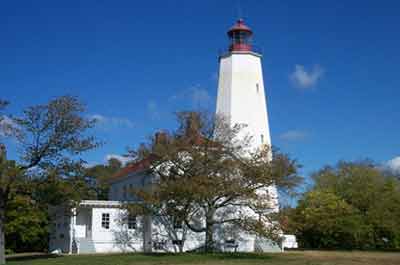
The Sandy Hook Lighthouse, first lit in 1764, stands as the oldest operating lighthouse in the United States. It has guided vessels at the edge of New York Harbor for centuries, watching everything from sail-era commerce to modern container traffic.
The setting is part beach, part military history, with nearby Fort Hancock adding extra layers to the visit.
The National Park Service notes the lighthouse area is generally open daily (with seasonal tours), and the park itself has its own hours and traffic patterns. Start with the official Sandy Hook Lighthouse page before you go.
Tip: warm-weekend crowds can be heavy, so arrive earlier than you think you need to.
Twin Lights, Navesink Light Station (Highlands)
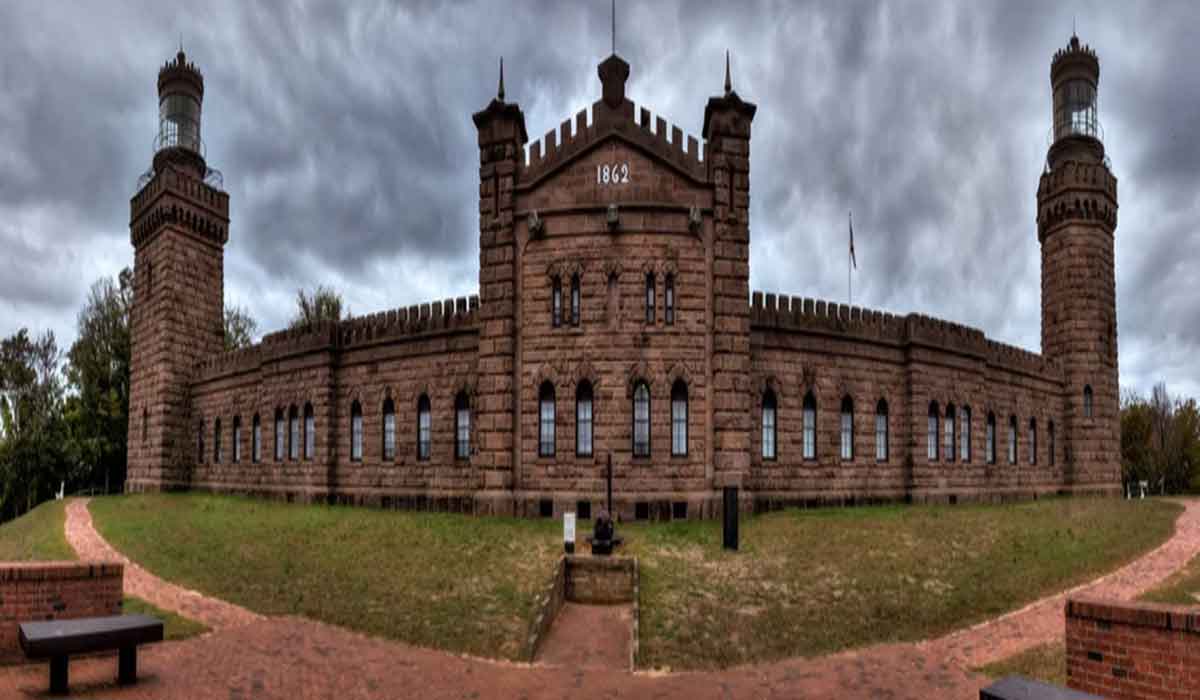
Perched high above the Highlands, Twin Lights has been a “look up and stare” landmark since 1862 and is listed on the National Register of Historic Places.
The twin beacons helped guide ships toward New York Harbor, and the hilltop location makes the views feel almost unreal on a clear day.
This site also has a long technology story, including early signal and communication work, without turning your visit into a science lecture.
Expect a museum-style stop with grounds worth walking. Because hours can change seasonally, it’s smart to check the Twin Lights Historic Site information before you set out.
Tip: it pairs nicely with nearby ferry-area exploring or a quick hike in Hartshorne Woods if you want to stretch your legs.
Sea Girt Lighthouse (Sea Girt, Monmouth County)
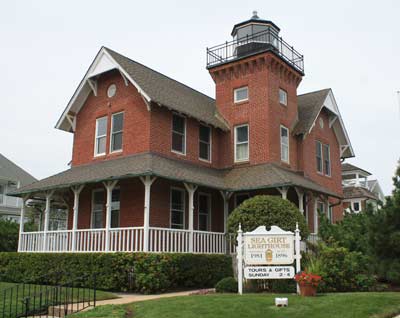
Sea Girt Lighthouse is one of the Jersey Shore's most charming historic beacons, built in 1896 to illuminate a once dangerous stretch of coastline between Barnegat and Navesink.
The lighthouse served mariners until 1945 and later became a community landmark restored by local volunteers.
It played a role in early coastal radio navigation experiments, adding to its historical significance. Check with Sea Girt Lighthouse for details.
Expect a walkable, neighborhood setting just steps from the beach gives visitors an unusually close, intimate lighthouse experience. Visitors can explore the keeper's quarters, climb the tower, and view maritime artifacts.
Tip: Pair your visit with a relaxing walk along Sea Girt Beach and Boardwalk, then grab lunch or dinner in nearby Spring Lake or Manasquan—both just minutes away and perfect for a full, low key coastal day.
Absecon Lighthouse (Atlantic City)
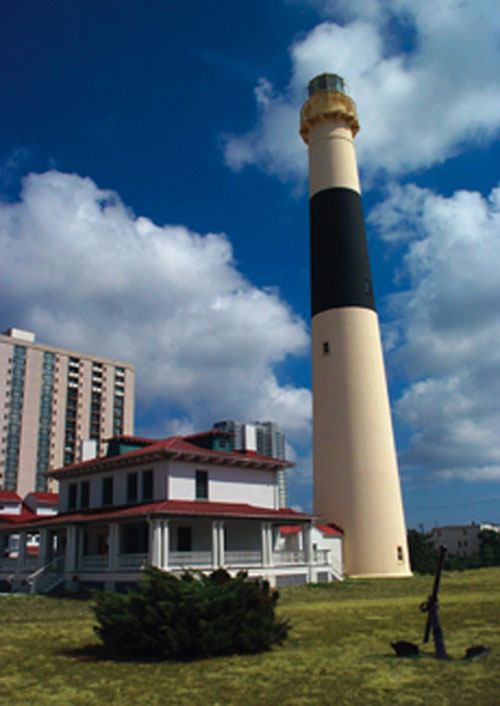
The Absecon Lighthouse proves you can get a classic lighthouse experience in the middle of a city.
First lit in 1857, it stands at a tower height of 171 feet and rewards anyone willing to tackle 228 steps.
At the top, Atlantic City spreads out like a map, and on bright days you can see well past the skyline to water in every direction.
Inside, the preserved Fresnel lens and exhibits make the climb feel earned, not just sweaty. For current visiting details and what’s open when, start with the Absecon Lighthouse overview.
Tip: pair it with the boardwalk, but do the lighthouse first, crowds and lines tend to get longer as the day goes on.
Barnegat Lighthouse, “Old Barney” (Barnegat Lighthouse State Park, Long Beach Island)
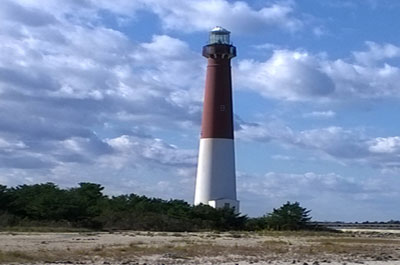
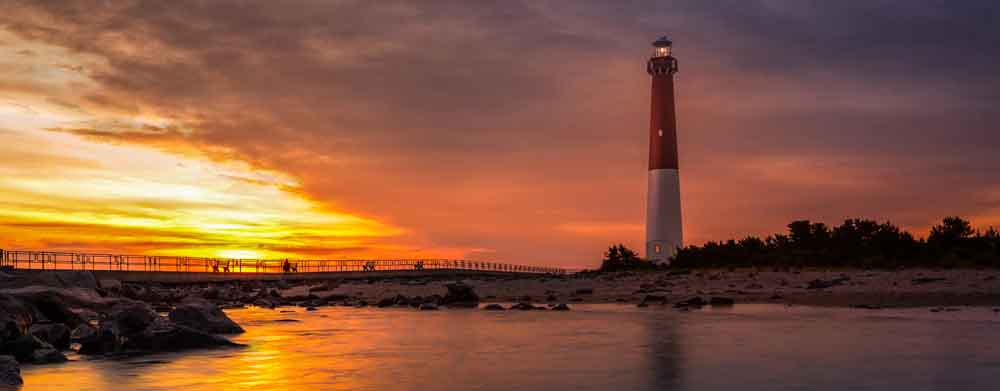
“Old Barney” is the postcard lighthouse most people picture when they think of Long Beach Island.
The current tower dates to 1859, built after an earlier lighthouse was lost to erosion. Its job was serious: protect one of the coast’s most active inlets, where shifting sandbars could punish even experienced captains. It once housed a first-order Fresnel lens whose light could be seen for many nautical miles.
Today, the setting is still half working maritime corridor, half peaceful park.
Tower climbs are typically seasonal for a fee, while the surrounding state park stays popular for walking, fishing, and inlet-watching.
Recent updates have listed the lighthouse as open weekends with limited hours, so confirm before you drive at Barnegat Lighthouse State Park.
Tip: the catwalk can be windy even on warm days, bring a light layer.
Cape May Lighthouse (Cape May Point State Park)
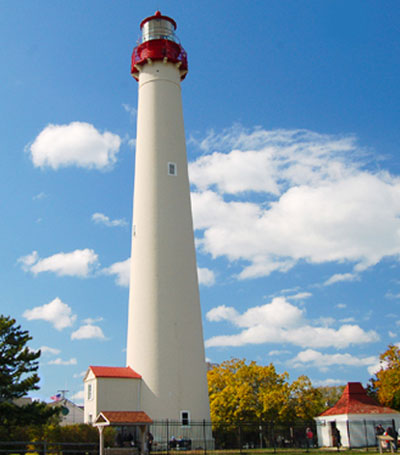
The Cape May Lighthouse, first lit in 1859, is the classic “end of the road” Shore beacon, with ocean on one side and the Delaware Bay on the other side.
Earlier lights at this site were also lost to erosion, which is part of the Cape May story: the coastline changes, and people adapt.
The climb is a workout but manageable for most visitors, with 199 steps on the original spiral stairway.
Tickets and special evening climbs are posted by the operator, so check the Cape May Lighthouse visitor page for current pricing and schedules.
Tip: this is a top birding area, so pack binoculars and walk the nearby trails after your climb.
Hereford Inlet Lighthouse (North Wildwood)
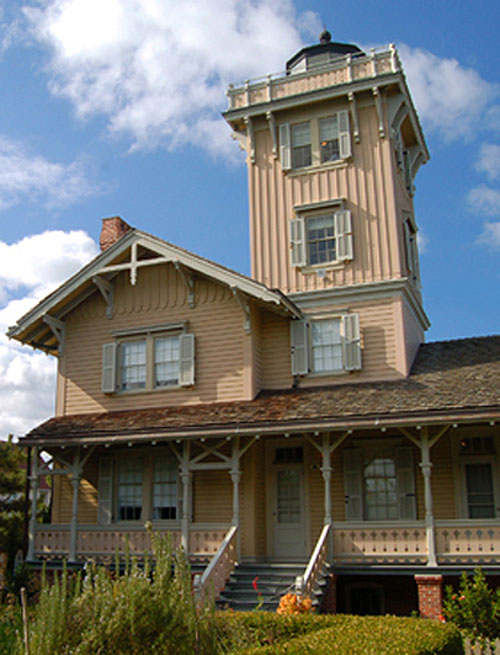
Built in 1874, the Hereford Inlet Light feels more like a welcoming home than a stark coastal tower.
The keeper’s house has a Victorian charm, with the lighthouse keeper role once central to its operation, and the grounds are a calm break from the Wildwoods’ louder energy.
It’s the kind of lighthouse that doesn’t need height to feel memorable.
Tours and interior access are often seasonal and limited, and schedules can shift from year to year. If you’re planning a trip, check with Hereford Inlet Lighthouse postings for the full season, with gardens generally open daily.
Tip: parking can get tight in peak summer, so go earlier, then roll your visit into a beach day or boardwalk evening.
East Point Lighthouse (Maurice River, Delaware Bay area)
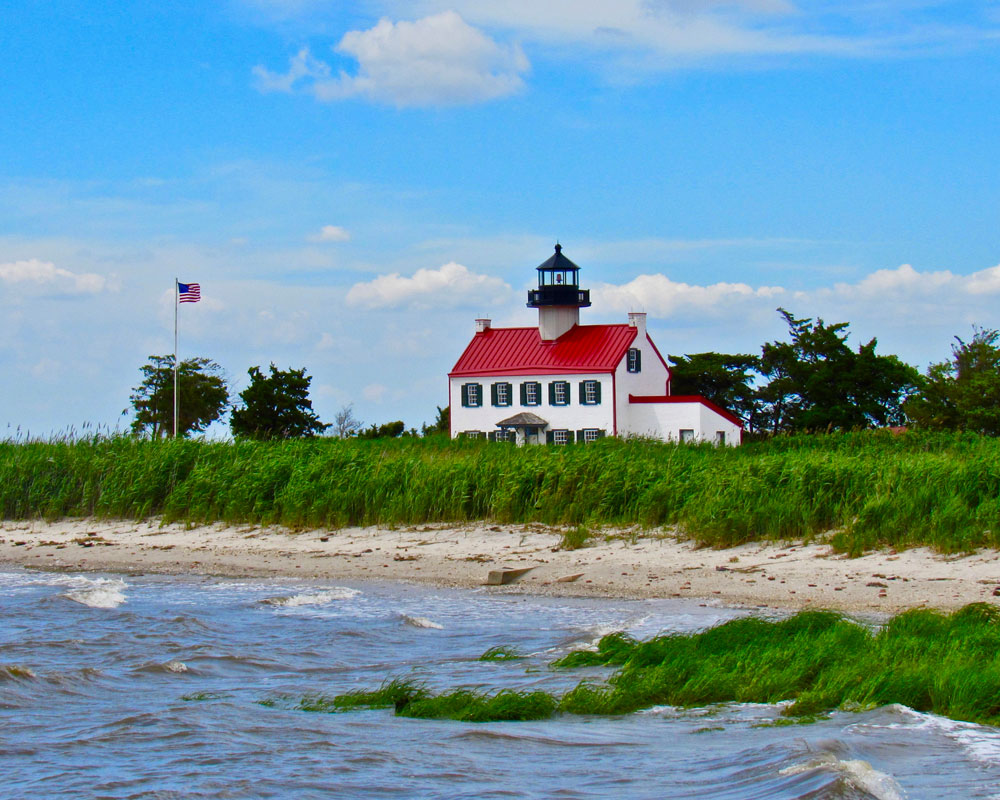
East Point Lighthouse, built in 1849, sits where the Maurice River meets the Delaware Bay, a place that feels like the edge of the map.
It was later decommissioned, damaged, and restored, and today it stands as a beacon for anyone who likes quiet roads and wide marsh views.
This isn’t a “show up anytime” lighthouse. It’s often open on limited days and special events, and it can be part of organized weekends like the Lighthouse Challenge. For nature context and the surrounding birding trail feel, the NJ Audubon East Point Lighthouse listing is helpful.
Tip: bring bug spray in warm months, and aim for late-day light, sunsets here can look painted.
Finns Point Rear Range Light (Salem County, Supawna Meadows)
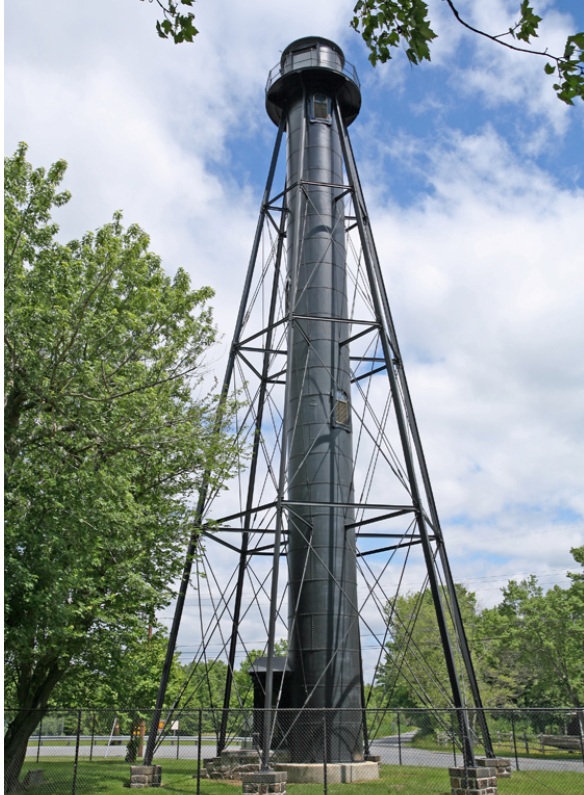
The Finns Point Rear Range Light is a different kind of lighthouse, and that’s exactly why it belongs on this list.
A range light works with a second light (front and rear), and when the two line up, captains know they’re centered in the channel near the Delaware Bay.
Finns Point’s roots go back to the late 1800s, and it’s one of the rarer surviving examples of this river-navigation system. For details: Finns Point Rear Range Light
Located in the Supawna Meadows National Wildlife Refuge, its best approached as a quiet, nature-first stop.
Interior access can be limited, so plan on exterior viewing and photography, then spend time nearby with birdwatching or wildlife spotting.
Tip: bring binoculars, and keep expectations flexible, this part of South Jersey runs on seasons, weather, and volunteer schedules.
Tinicum Rear Range Light (Paulsboro, Delaware River)
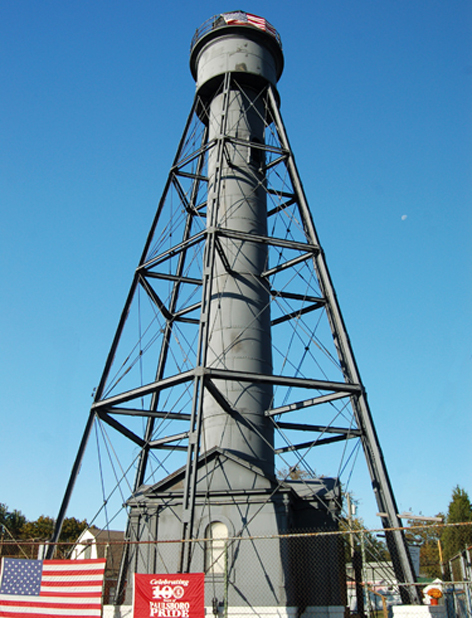
Tinicum Rear Range Light (from the 1880s era) looks nothing like a beach lighthouse. It’s an unusual all-black steel tower with a red light, built to serve the working Delaware River shipping corridor and maintained in its history by the United States Coast Guard.
The industrial feel is part of the appeal, it’s a reminder that lighthouses weren’t just coastal icons, they were practical tools in busy commercial lanes.
Public access is usually limited to special open days, and there’s no climb. It’s a great stop for photographers who like strong shapes and stark contrast, especially under dramatic clouds.
Tip: confirm dates with Tinicum Rear Range Light before driving, and consider pairing it with other Delaware River lights or a nearby refuge stop for a full “working waterway” day.
How to plan a lighthouse day trip in New Jersey without feeling rushed
Trying to cram too many towers into one day is the fastest way to turn a fun outing into a checklist. Instead, plan around clusters and give yourself time for parking, walking out to viewpoints, and the occasional “let’s stay five more minutes” moment.
If you’re chasing climbs, remember that climbing the observation tower at many sites means tight stairs and small landings, and some sites close climbs earlier than the grounds. Bring water, sunscreen, and a card or cash for ticket booths. For bayside and marsh locations, add bug spray and consider binoculars for birds.
Easy groupings that cut driving time
- Sandy Hook + Twin Lights: Big history in the morning, hilltop views right after, with great coastal scenery between stops.
- Long Beach Island + Tuckerton Seaport: Barnegat Lighthouse (“Old Barney”) plus a family-friendly museum-style lighthouse visit, with waterfront vibes all day.
- Cape May Lighthouse + Hereford Inlet: Two very different moods, one classic state park climb, one charming keeper’s-house stop.
- East Point + Finns Point + Tinicum (separate quiet-day loop): Best for people who like marsh views, river history, and less crowded roads.
Quick safety and comfort tips for climbs and windy catwalks
Wear closed-toe shoes, take breaks on landings, and keep kids close on narrow stairs. If heights make you uneasy, it’s fine to skip the climb and enjoy the grounds. Coastal weather changes fast, even in summer, so a light layer can save the day when wind kicks up.
What to know before you go: tours, fees, photos, and lighthouse etiquette
Most lighthouse tours in New Jersey run spring through fall, with the widest access on weekends and during special event days. Fees vary a lot. Some sites are free museums, others charge for tower climbs, and a few sell timed tickets. If you want to plan around a well-known statewide event, the annual Lighthouse Challenge can offer rare access and longer hours. Keep an eye on the Lighthouse Challenge of New Jersey for updates.
For photos, morning light can be crisp at oceanfront towers, while golden hour tends to flatter marsh and bay locations. A wide-angle lens helps inside tight stairwells and small lantern rooms. Follow posted rules on flash and barriers, especially around the Fresnel lens.
Seasonal hours change a lot, here’s how to avoid a closed door
- Verify hours the day before (and again the morning of).
- Confirm the last climb entry time, it’s often earlier than closing.
- Check for special event dates or weather closures.
- Keep a nearby backup plan (beach walk, park trail, or local museum) in case a site is closed.
Final Thoughts
New Jersey’s lighthouses give you big views and small human stories in the same stop. You can stand by the 1764 Sandy Hook Lighthouse, then end a different weekend at a quiet Delaware River range light that most travelers never notice. That variety is the fun of it, these aren’t copies of the same tower, they’re snapshots of New Jersey’s coastline, commerce, and changing shorelines.
Start with one easy cluster, take a few photos, then build a repeat tradition around the next region. Save this list, check seasonal tour schedules before you go, and plan a return trip for the bayside and river lights when you’re ready for a calmer kind of coastal day.
Frequently Asked Questions
About New Jersey Lighthouses
How many New Jersey lighthouses are featured in this guide?
This guide covers ten historic New Jersey lighthouses. They include coastal towers, bay beacons, and Delaware River range lights, so each site offers a different setting and visitor experience.
Which New Jersey lighthouse is the oldest?
Sandy Hook Lighthouse is the oldest operating lighthouse in the United States. It was first lit in 1764 and continues to be associated with navigation at the entrance to New York Harbor.
Which New Jersey lighthouses can visitors climb?
Visitors can climb several New Jersey lighthouses, including Absecon Lighthouse, Cape May Lighthouse, and Sea Girt Lighthouse. Climb access, ticket prices, and last-entry times vary, so check the official site before traveling.
What is the best way to plan a New Jersey lighthouse day trip?
Plan around nearby sites instead of trying to visit all ten in one day. Sandy Hook and Twin Lights work well together, while Cape May Lighthouse and Hereford Inlet offer two different lighthouse experiences within the same general coastal region.
When are New Jersey lighthouses open?
Many lighthouse tours operate from spring through fall, with the broadest access on weekends and during special events. Seasonal schedules, limited tour days, weather closures, and earlier last-climb times make it important to verify details before leaving.


Recent Articles


-
A Guide to New Jersey's Best 2026 Christmas Events and Things To Do
Oct 23, 26 03:02 PM
 Plan your holiday season with New Jersey's top 2026 Christmas events and festivals, from cozy town celebrations to big-ticket attractions kids love.
 -
Best New Jersey Restaurants Open for Thanksgiving & Christmas: 2026
Oct 20, 26 04:39 PM
 Find the best New Jersey restaurants open for Thanksgiving and Christmas, 2026, with dining options to help you plan a festive holiday meal.
 -
A Culinary Journey Through New Jersey's Best Farm-to-Table Restaurants
Oct 19, 26 05:14 PM
Explore New Jersey's best farm-to-table restaurants, where local ingredients shape each meal. Find fresh dining ideas for your next Garden State outing.