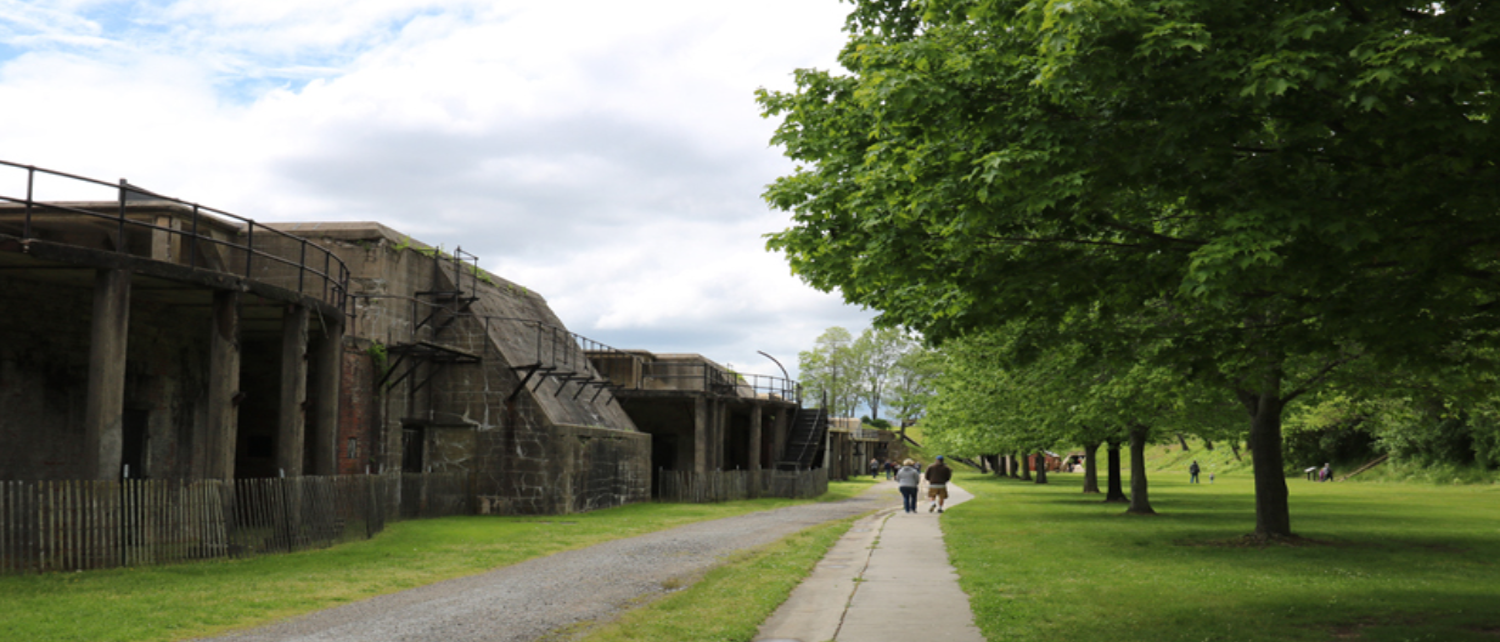
photo courtesy: New Jersey State Park Service
A Guide to Visiting Fort Mott State Park
Looking for a place that blends real military history with big river views?
You will love Fort Mott State Park in Pennsville, New Jersey.
- Fort Mott State Park is a free historic site with river views, walkable batteries, and a small museum.
- The fort was built as part of the Endicott coastal defense system and once helped guard the Delaware River.
- Visitors can picnic, watch ships, explore the batteries, and see interpretive signs that explain the site's military history.
- Spring and fall are strong times to visit for birdwatching, and summer adds the seasonal ferry to Fort Delaware.
- Plan about 1.5 to 3 hours for Fort Mott alone, and bring your own food, water, sunscreen, and bug spray.
Step Into History: How Fort Mott State Park NJ Defended the Delaware River
Fort Mott was one of three sites that protected the Delaware River at the turn of the 20th century, along with Fort Delaware and Fort DuPont.
Built in the late 1800s, the fort was part of a coastal defense plan that added modern batteries and new guns facing the river.
These large guns could reach ships 7 to 8 miles away, a serious shield for the busy port of Philadelphia.
The fort saw activity around the Spanish-American War and World War I, then lost its edge by World War II as technology changed.
New Jersey turned the site into a park in 1951, keeping much of the structure intact for visitors.
Today, you can walk past concrete batteries, step near magazines, and trace the earthworks that shaped the line of fire.
Interpretive signs help you follow how the fort worked from day to day. For official park and history details, the Fort Mott Historic Site page is a great resource.
The setting ties it all together. You get sweeping river views with ships passing, a green ribbon of lawn under old trees, and long shadows across thick concrete walls.
It is easy to imagine the crews at their posts, eyes on the horizon.
What Is an Endicott-Era Fort?
In the late 1800s, the United States upgraded old coastal forts with a plan called the Endicott program. Engineers built concrete batteries that were lower to the ground and harder to hit.
They mounted powerful breech-loading guns that could fire far and reload faster. Searchlights, plotting rooms, and range finders helped aim each shot.
Fort Mott fits right into that timeline. It shows how the country moved from brick forts to modern concrete works.
When you stand by the batteries here, you are seeing the type of design that guarded many harbors around the nation.
Walk the Batteries, Bunkers, and Earthworks
Exploring the batteries feels like walking through a giant outdoor machine.
You will see open gun emplacements with thick concrete walls, stairways, and metal details. Some paths lead near the underground magazines where shells and powder were stored. The grassy ramparts soften the lines, but the size still impresses.
Look for interpretive panels near the guns and passageways. They explain how crews loaded, aimed, and communicated under pressure. Follow posted signs and respect any closed areas, since parts of the structure are fragile.
Small Museum and Visitor Center Highlights
When open, the small museum helps you make sense of the fort before you walk it. Displays cover artillery technology, daily life for soldiers, and maps of the river defenses.
Start here, pick up a mental map, then head outside to connect the dots between signs, structures, and views.
Stunning Scenery and Simple Activities: Best Things To Do at Fort Mott State Park
This is a low-key, high-reward place to spend a few hours. Pack lunch and grab a table or spread a blanket by the river. Watch cargo ships and tugs move along the Delaware like giant slow trains. The lawns are ideal for a relaxed catch or a toddler’s first kite. Level paths make walks easy for all ages.
Wildlife adds to the show. In spring and fall, look toward Pea Patch Island for herons and egrets that nest across the water.
It is one of the largest heron rookeries in the mid-Atlantic, so binoculars pay off.
On some weekends, living history events bring uniforms, drills, and stories to life. When in season, pair your visit with the ferry to Fort Delaware on Pea Patch Island for a full day.
Top Photo Spots and Picnic Areas by the Delaware River
- Shoreline tables give you ship views and open sky.
- Wide lawns frame the river and the long battery walls.
- The batteries make dramatic backdrops. Think textured concrete, old railings, and stark lines.
Pack a blanket and some snacks. Golden hour lights up the walls and the water, and sunset silhouettes passing ships for easy wins with the camera.
Do Not Miss Finn’s Point Lighthouse and National Cemetery
Just down the road sits the slender, black iron tower of Finn’s Point Range Light, once used to help guide ships up the Delaware. It is a quiet, photogenic spot.
Near the park is Finn’s Point National Cemetery, a place for reflection where many Civil War dead are buried.
If you go, move slowly and be mindful of the setting. The Finn’s Point National Cemetery page offers background on the site’s history and purpose.
Birdwatching Tips Near Pea Patch Island
- Bring binoculars in spring and fall. Look for herons, egrets, ducks, and geese.
- Scan the island edges and the marsh. Birds move between roosts and feeding spots.
- Keep your distance and stay on paths. Protect the rookery and sensitive habitat.
A simple checklist and a pocket field guide help kids stay engaged. Give each person a “find” to look for, like a great egret or a double-crested cormorant.
Easy Trails and Riverfront Walks for All Ages
Paths are mostly flat and friendly for strollers. Start by the visitor area, loop past the main batteries, then swing along the riverfront back to the lawn.
You get history, shade, and water views without a big climb or long mileage.
Wear comfy shoes and watch for uneven surfaces near historic structures. The breeze off the river can feel cool even in summer.
Ferry to Fort Delaware and Living History Events
The seasonal ferry to Fort Delaware connects you to Pea Patch Island for a strong two-site day.
At the island fort, costumed guides and staged activities often show how soldiers cooked, drilled, and managed daily life.
Back at Fort Mott, events like Historic Soldiers Weekend fill the lawns with tents, gear, and demonstrations. Check dates ahead so you can plan your day around the ferry and programs.
Plan Your Visit: Hours, Fees, Parking, and Smart Local Tips
Fort Mott State Park is generally open daily with seasonal hours, usually 8 AM to sunset, and closed on Thanksgiving, Christmas, and New Year’s Day. Admission and parking are free. There are no food sales on-site, so bring what you need.
Pack water, snacks, sunscreen, and bug spray. A hat and light layers help with the river breeze.
Many outdoor areas are accessible, though some historic structures have stairs or uneven footing. Restrooms are available.
Be kind to the site: do not climb where signs say not to, and do not enter closed areas.
Best Time to Go and How Long to Stay
- Spring and fall bring bird activity and mild weather.
- Summer delivers long evenings and the ferry to Fort Delaware.
- Winter is quiet if you want open space and calm paths.
- Plan 1.5 to 3 hours for Fort Mott alone, longer if you add the ferry.
Free Admission, What to Bring, and Accessibility
Entry and parking are free. Bring water, snacks or a picnic, sunscreen, hats, bug spray, and layers. Many outdoor areas are accessible, but some historic stairs and interior spaces are not. Restrooms are on-site, usually near the main parking area.
Getting There and Nearby Stops
The park is in Pennsville, New Jersey, along the Delaware River. Driving is simple. The park sits in Pennsville along the Delaware River, with local roads leading right to the gate at 454 Fort Mott Rd
Pair your visit with the ferry to Fort Delaware when running, see the Finn’s Point Range Light, and take a respectful walk at Finn’s Point National Cemetery.
Ferry Service is available from Delaware City, DE to Fort Mott Delaware River & Bay Authority Ferries
Rules, Safety, and Respect for the Site
Stay on marked paths and follow posted signs. Keep pets leashed and pick up after them. Supervise kids near water and steep earthworks. Pack out trash or use provided bins. Treat the cemetery and historic structures with care.
Frequently Asked Questions
About Fort Mott State Park
What is Fort Mott State Park?
Fort Mott State Park is a historic river defense site in Pennsville, New Jersey, built as part of the Endicott coastal defense system. Today, it has concrete batteries, open lawns, a small museum, and broad views of the Delaware River.
What can you do at Fort Mott State Park?
You can walk the batteries, read the interpretive signs, picnic by the river, and watch cargo ships and tugboats pass by. In season, you can also connect your visit with the ferry to Fort Delaware on Pea Patch Island.
Is Fort Mott State Park free?
Yes, admission and parking are free. The article also notes that there are no food sales on-site, so bringing your own snacks or a picnic is the easiest option.
When is the best time to visit Fort Mott State Park?
Spring and fall are the best seasons for mild weather and birdwatching. Summer is also popular because the ferry to Fort Delaware runs in season, while winter is quieter for a low-key walk.



Explore NJ’s Top 10 Weird Attractions for Kids—Whimsy Awaits!



Explore New Jersey’s hottest new restaurant grand openings across the state
Recent Articles


-
Ultimate Guide to The Best Restaurants in Asbury Park, NJ
Sep 18, 26 04:53 PM
 Explore Asbury Park New Jersey restaurants, with top local dining spots, fresh options, and easy picks for your next meal.
 -
Grand Openings: Best New Jersey Restaurants To Try in 2026
Sep 18, 26 04:34 PM
 Discover the most Most Talked-About New Jersey Restaurant Openings. This list will be updated throughout 2026
 -
Esquina No 525 a Must-Visit Restaurant in Asbury Park, NJ
Sep 18, 26 04:12 PM
 Read our in depth review of Esquina No 525 Restaurant, Asbury Park, NJ. Discover why it earns top marks for food, ambiance and service