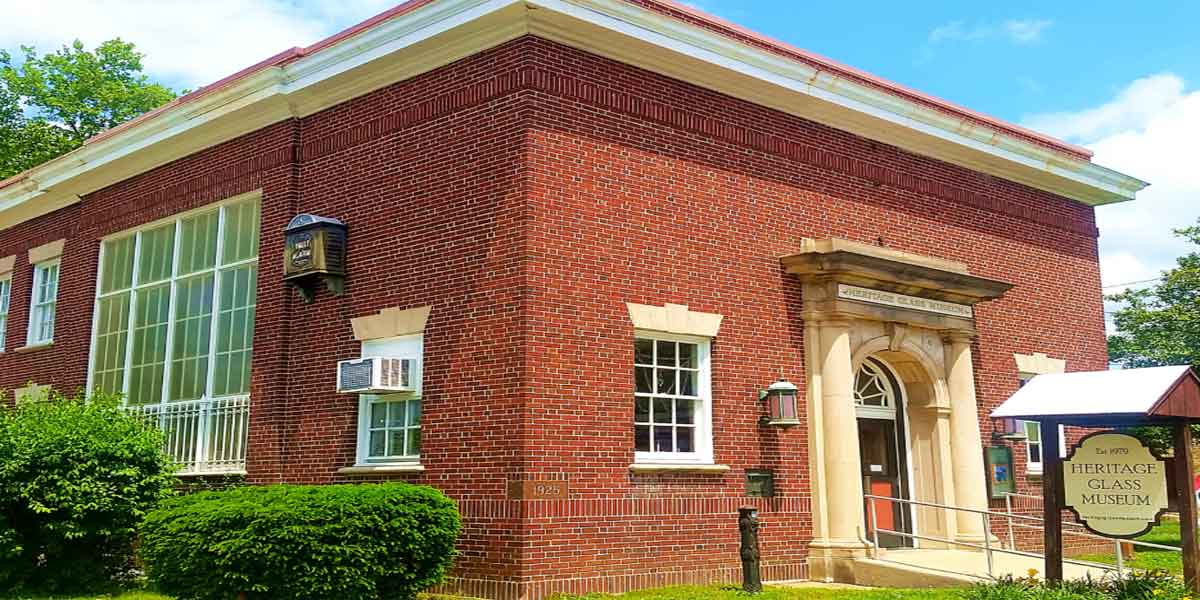
photo courtesy: Heritage Glass Museum
A Guide to the Heritage Glass Museum in Glassboro, NJ
Curious how a small New Jersey town helped shape American glassmaking?
The heritage glass museum brings that story to life in one compact, welcoming space.
- The Heritage Glass Museum is in downtown Glassboro at 25 East High Street, inside a former 1926 bank building.
- Admission is free, and the museum is open Saturdays from 11 am to 2 pm.
- The collection covers early bottles from the late 1700s through the 1970s, plus South Jersey art glass and figurines.
- Most visits take 30 to 60 minutes, which makes it an easy stop for families, students, and history fans.
- Group visits and special appointments may be arranged by email, including some weekday evening times.
This guide covers the essentials: Think of it as a guide to the heritage glass museum that gives you only what you need.
Why the Heritage Glass Museum NJ matters, plus a short history
Glassboro grew up around glass. The story starts in 1779, when Solomon Stanger purchased land to build a glass works in the woods.
He used what South Jersey had in abundance, clean sand for clear glass, forests for fuel, and local clay for furnace bricks. That mix of resources set the area on a path that lasted for generations. Factory jobs drew workers, shops opened, and rail lines carried finished goods. Glass helped this region grow, and it left a trail of bottles, jars, and art glass that still turn up in family attics.
The museum exists to share that story. Founded in 1979, it protects local glass, teaches visitors how it was made, and keeps community memory alive. It sits inside a former bank built in 1926, a solid brick landmark with a classic vault and high ceilings.
The building later housed the Glassboro Public Library, then became the museum’s home. That turn of fate fits the mission, a place built for safe keeping now filled with fragile art and everyday objects.
Plan 30 to 60 minutes for your visit. Families, students, and history fans can all enjoy the collection without rushing. Exhibits rotate, and some pieces travel to other institutions, so displays can change.
Glassboro’s roots in glassmaking, from 1779 to today
Solomon Stanger began glassmaking here in 1779, using local sand, wood, and clay. Skilled hands turned raw materials into bottles and tableware that served homes and businesses across the region.
Over time, factories grew, techniques improved, and a local identity formed around glass. That legacy still shapes Glassboro. The museum preserves the tools, bottles, and art that tell this long-running story.
The museum’s story and the old 1926 bank building
The structure started as a bank in 1926. The Great Depression hit hard, and the bank failed, as many did. The town later used the sturdy space as the Glassboro Public Library.
In 1979, the Heritage Glass Museum opened and eventually took root in this building. Inside, you will notice tall windows, polished floors, and a quiet calm that suits the displays. The old vault area adds a fun twist, a safe for treasures that now holds glass artifacts.
What a quick visit feels like, from entry to exit
Walk in and a volunteer or docent will offer a simple hello. You can browse at your own pace. Start with early bottles, then check the art glass cases and small figurines.
Pause at the research corner and skim a title or two. Wrap up with questions, or ask for a tip on what not to miss. It is friendly and low pressure, like visiting a neighbor who happens to care for rare glass.
Plan your visit: hours, address, admission, and heritage museum tours
Here is the quick plan. The museum is open on Saturdays from 11 am to 2 pm. Admission is free. The address is below, and it sits in downtown. Service animals and well-behaved pets are welcome.
If you are bringing a group, contact the museum by email to set up a time. Weekday evening appointments may be possible on Wednesday or Thursday.
Arrive near opening time to get quiet galleries and extra time to chat with volunteers. Budget 30 to 60 minutes, enough for a full lap and a few questions. Displays can change because items sometimes go on loan to other institutions.
If you have a must-see topic, like South Jersey bottle shapes or studio art glass, you can ask ahead about current exhibits.
Before you go, check the museum’s site for any updates or special events at heritageglassmuseum.org.
Hours and best times to go
- Open Saturdays, 11 am to 2 pm.
- Special appointments may be possible on Wednesday and Thursday evenings.
- Arrive near opening for a quiet visit.
- Plan 30 to 60 minutes for the full experience.
Where it is: 25 East High Street, Glassboro, NJ
- Address: 25 East High Street, Glassboro, NJ
- In the downtown area, near shops and local services.
- Look for posted signs for public parking nearby.
Admission, accessibility, and policies
- Admission is free. Donations help preserve and display the collection.
- Service animals and well-behaved pets are welcome.
- The building is historic, so accessibility can vary. Contact the museum with questions before your visit.
How to book heritage museum tours for groups
- Group visits can be arranged by email.
- Reach out 1 to 2 weeks in advance with group size, preferred dates, and any learning goals.
- Weekday evening appointments may be possible on Wednesday or Thursday.
What to see inside: top exhibits, research library, and learning ideas
The collection spans early bottles from the late 1700s up through the 1970s, a sweep that shows how forms and colors changed with the times.
You will also find South Jersey art glass, with pieces that sparkle in sunlight, plus small treasures like animal figurines. The mix gives both serious collectors and casual visitors a way in.
Kids spot shapes and colors, while hobbyists look for details in the glass. Items can be on loan, so the room may look a little different each visit.
A compact research library anchors one corner. It holds books on glass blowing, factory history, and local makers. If you are new to glass, start with a basic text on techniques, then ask a volunteer for a recommendation based on your interests.
Families can turn the visit into a simple discovery walk. Pick a color to hunt for, or sketch a favorite bottle shape. Read a label together, then guess how the piece was used in a home or shop. End by asking the docent one question about how a specific item was made. All of this keeps hands off the glass, while minds stay engaged.
Early bottles and South Jersey glass art to look for
Expect early bottles from the late 1700s to mid 1800s, and later forms through the 1970s. Look for South Jersey art pieces, plus small animal figurines with bright color and charm.
Tips for spotting details:
- Bubbles in the glass can signal older, hand-worked pieces.
- Color tells a story, olive, aqua, amber, and the rare deep blues stand out.
- Pontil marks on the base hint at hand-blown origins and finishing steps.
The glass research library and how to use it
The research corner holds books and files on glass blowing methods and local factory history. Students and hobbyists can ask a volunteer to suggest starter topics, such as mold-blown versus free-blown forms.
If you are studying a South Jersey maker, request guidance to find period catalogs, maps, or articles. Volunteers can point to beginner-friendly resources or deeper sources.
Family friendly ways to explore with kids
- Count bottle colors and vote for a favorite.
- Sketch one object and label its shape or pattern.
- Find three animal figurines and compare their size or color.
- Ask a docent, how was that made, and listen for one new fact.
- Keep a safe distance, use inside voices, and walk, not run.
Frequently Asked Questions
About Heritage Glass Museum in GlassboroWhere is the Heritage Glass Museum located?
The museum is at 25 East High Street in Glassboro, New Jersey. It sits in downtown Glassboro inside a historic 1926 bank building.
What are the Heritage Glass Museum hours?
The museum is open Saturdays from 11 am to 2 pm. Special appointments may also be possible on Wednesday or Thursday evenings.
Is admission to the Heritage Glass Museum free?
Admission is free. Donations help support the preservation and display of the collection.
What can you see inside the museum?
Visitors can see early bottles, South Jersey art glass, small figurines, and a research library with books on glass blowing and local factory history. Some items rotate, so the displays can change from visit to visit.
How long should I plan for a visit?
Most people can see the museum in 30 to 60 minutes. That gives enough time to browse the exhibits, ask questions, and look through the research materials.


Explore NJ’s Top 10 Weird Attractions for Kids—Whimsy Awaits!



Explore New Jersey’s hottest new restaurant grand openings across the state
Recent Articles


-
Ultimate Guide to The Best Restaurants in Asbury Park, NJ
Sep 18, 26 04:53 PM
 Explore Asbury Park New Jersey restaurants, with top local dining spots, fresh options, and easy picks for your next meal.
 -
Grand Openings: Best New Jersey Restaurants To Try in 2026
Sep 18, 26 04:34 PM
 Discover the most Most Talked-About New Jersey Restaurant Openings. This list will be updated throughout 2026
 -
Esquina No 525 a Must-Visit Restaurant in Asbury Park, NJ
Sep 18, 26 04:12 PM
 Read our in depth review of Esquina No 525 Restaurant, Asbury Park, NJ. Discover why it earns top marks for food, ambiance and service