Kayaking & Canoeing in New Jersey:
Where to Paddle
New Jersey has far more paddling variety than many people expect, with calm lakes, winding rivers, coastal bays, and tidal waterways. Kayaking and canoeing in New Jersey can be relaxing or adventurous, but choosing the right launch point matters because water conditions, access, and skill levels vary. This guide highlights scenic places to paddle and what to know before you go.
- New Jersey offers kayaking and canoeing on flatwater lakes, reservoirs, rivers, canals, coastal bays, and Pine Barrens waterways.
- The Delaware and Raritan Canal, Smithville Lake, and Lake Wawayanda are strong choices for beginners because they offer calm water and accessible launch areas.
- The Mullica River and Maurice River provide Pine Barrens scenery, wildlife viewing, and longer river trips, while tidal sections require extra planning.
- The Delaware Water Gap is best for mountain scenery and varied river conditions, while Cape May salt marshes are well suited to birdwatching and calm tidal paddling.
- Check official park, river, launch, rental, weather, and water-level information before each trip because access and conditions can change.
Why New Jersey Is a Great Place for Kayaking and Canoeing
New Jersey has flatwater lakes, protected reservoirs, tidal rivers, coastal bays, the D&R Canal, and Pine Barrens waterways. A first outing should feel manageable: steady strokes, basic turning, and enough time to return before wind builds.
Kayaks are often easier to paddle solo and handle wind well.
Canoes carry more people and gear, which suits families and overnight river trips. For unfamiliar water, a rental or guided trip removes the headache of transporting boats and arranging a shuttle.
Kayaking & Canoeing in New Jersey: Top Paddling Spots by County
Discover New Jersey's best kayaking and canoeing destinations, with scenic rivers, tranquil lakes, and coastal waterways organized by county for every skill level.
Burlington County: Rancocas Creek & Smithville Lake
Burlington County stands out for paddlers who want both a wild creek and a gentle lake in the same destination. Two local favorites—Rancocas Creek and Smithville Lake—offer a mix of natural beauty, accessible launches, and habitats perfect for nature lovers. If you enjoy kayaking or canoeing in New Jersey, these waterways deliver miles of adventure without the crowds found at bigger rivers.
Rancocas Creek: Tidal Twists and Wooded Banks
Rancocas Creek is a prime choice for both new paddlers and seasoned explorers. This waterway meanders through forests, marshland, and small towns, making it easy to spot heron, turtles, and eagle nests. The creek is wide and gentle in most places, with only minor currents, so you can relax and enjoy the scenery.
Some highlights of paddling the creek:
- Scenic routes: The stretch between Pemberton and Mount Holly is well-loved for its mix of peaceful bends and historic views. This section covers roughly 8 miles of paddling with plenty of wildlife along the banks.
- Easy launches: Public access points in Pemberton and Mount Holly make it simple to set your own schedule. If you want to go with a group or need gear, Rancocas Pathways offers kayak rentals and guided trips.
- Beginner-friendly: The slow current lets you focus on nature, not navigation, so even first-timers feel comfortable on the water.
For more tips, paddler reports, and route ideas, take a look at the Rancocas Creek canoeing guide.
Smithville Lake: Calm Waters and Easy Exploration
If you prefer flatwater paddling, Smithville Lake is a must-visit. This quiet lake is part of the Historic Smithville Park, making it easy to pair a morning paddle with afternoon hikes or a picnic.
What makes Smithville Lake ideal for kayaking and canoeing in New Jersey:
- Sheltered setting: The lake is mostly surrounded by forest and parkland, so you won’t fight with boat wakes or big crowds. It’s perfect for families or anyone looking for a mellow paddle.
- Wildlife viewing: You’ll often spot ducks, osprey, and turtles along the shore, with spring bringing a burst of wildflowers and green views.
- Simple access: Launches are right inside the main park area with lots of parking. You can bring your own boat or check the park website for local rental options.
For an easy, all-ages paddle in a beautiful setting, Smithville Lake rounds out Burlington County’s top spots for kayaking and canoeing in New Jersey.
Atlantic & Ocean Counties: Mullica River, Egg Harbor River, and Cedar Creek
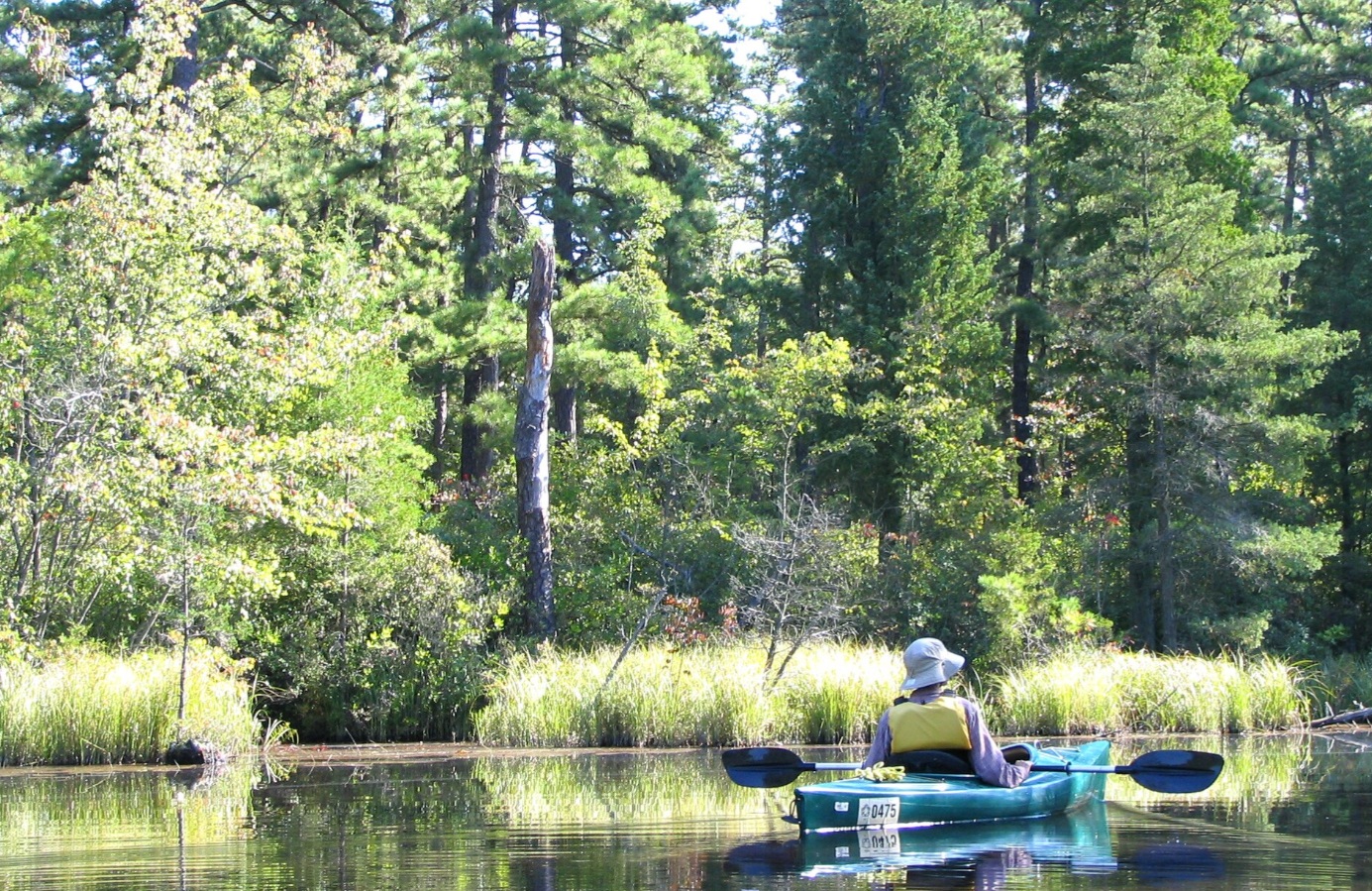
Photo Courtesy Mwanner at English Wikipedia
Kayaking Canoeing in New Jersey shines brightest where water, woods, and wildlife all meet. In Atlantic and Ocean counties, three rivers stand out: the Mullica River, the Egg Harbor River, and Cedar Creek.
Each offers a chance to paddle through the heart of the Pine Barrens, spot rare birds, and enjoy the tranquil beauty that sets this region apart.
Whether you’re looking for a full-day adventure or a short escape, these rivers deliver something special for every paddler.
Mullica River: A Wild Pine Barrens Classic
The Mullica River is a true Pine Barrens experience. Stretching over 50 miles, it snakes through Wharton State Forest and eventually reaches Great Bay, just north of Atlantic City. This river's calm flow and sandy bottom make it beginner-friendly, while its remote stretches offer solitude even in the busy season.
- Unspoiled Scenery: You float past pitch pines, cranberry bogs, and acres of wildlife habitat, much of it protected by the Edwin B. Forsythe National Wildlife Refuge.
- Wildlife Spotting: Keep your eyes out for ospreys, herons, and turtles, plus striped bass and blue claw crabs in the lower, brackish waters.
- Popular Launches: Common put-ins include Mullica River Road and Atsion Lake, making trip planning easy for both day-trips and overnight paddles.
- Unique Water: The reddish tea-stained water comes from pine tannins and iron—a sign you’re deep in classic Jersey wilderness.
For more on the Mullica’s ecological importance and access points, check out the Pinelands Alliance watershed guide.
Egg Harbor River: Long Scenic Floats and Tidal Surprises
The Egg Harbor River runs nearly 60 miles from the headwaters near Berlin down to the saltmarsh estuary, offering both sheltered Pine Barrens stretches and open, tidal views. It’s one of the longest canoeable rivers south of the Raritan, and its easy currents invite paddlers of every skill level.
- Diverse Trip Options: Upper sections are slow with sandy banks, perfect for first-timers or families. Downriver, the channel widens and becomes tidal near Mays Landing.
- Rich Birdlife: Paddle early in the morning to catch herons, kingfishers, and even bald eagles along the marshes.
- Access and Amenities: The river is well mapped, with multiple public launches from Weymouth Furnace Park to Lake Lenape Park. In Mays Landing, you’ll find outfitters and easy parking.
- Tidal Influence: As you near the coast, the river’s flow meets saltwater, so check the tides for an easier ride.
For official river information and current water conditions, visit the National Wild and Scenic Rivers page for Great Egg Harbor.
Cedar Creek: Clear Water and a Hidden South Jersey Gem
Cedar Creek, though smaller, packs a big punch. Flowing from Double Trouble State Park toward Barnegat Bay, this spring-fed river stays clear and cool, fed by both aquifers and woodland streams. It’s the perfect spot for photographers, wildlife watchers, or anyone craving a quieter paddle.
- Pine-scented Air: The creek is lined with cedar and pine, giving you that classic South Jersey woods aroma.
- Family-friendly Trips: Short distances, gentle currents, and easy access in Double Trouble make this a favorite for beginners or quick outings.
- Crystal Clear Water: Even in summer, you can spot fish darting beneath your kayak thanks to the spring-fed clarity.
- Easy Launching: Both Double Trouble State Park and Dudley Park offer direct access with picnic areas for enjoying lunch by the water.
Pairing a paddle on Cedar Creek with a stroll through Double Trouble’s historic village blends river fun with a taste of Pine Barrens heritage.
Quick Comparison Table: Top River Features
River |
Best For | Typical Wildlife | Launch Sites | Difficulty |
|---|---|---|---|---|
Mullica River |
Remote adventures | Ospreys, turtles, bass | Mullica River Road, Atsion | Easy-Med |
Egg Harbor River |
Scenic, long day trips | Herons, eagles, waterfowl | Weymouth, Lake Lenape, Mays | Easy-Med |
Cedar Creek |
Short, family paddles | Fish, turtles, songbirds | Double Trouble, Dudley Park | Easy |
These three rivers in Atlantic and Ocean counties offer paddlers prime examples of why kayaking canoeing in New Jersey is a must for nature lovers. With easy access, scenic routes, and year-round wildlife, each one is ready for your next adventure.
Sussex & Passaic Counties: Lake Wawayanda and Split Rock Reservoir
These counties bring a wilder side to kayaking canoeing in New Jersey. If you want clear water, remote forests, and paddles that feel untouched, Lake Wawayanda and Split Rock Reservoir should be at the top of your list. Both spots give you a true back-to-nature escape with well-maintained amenities, easy access, and hours of scenery to explore. Whether you crave peaceful flatwater, birdwatching, or a few hours of fishing, this corner of North Jersey delivers.
Lake Wawayanda: Forested Shores and Tranquil Paddling
Lake Wawayanda anchors the huge Wawayanda State Park, spanning over 35,000 acres in Sussex and Passaic. If you’re looking to combine paddling with hiking trails, mountain biking, or even swimming, you’ll find all three here.
Paddling Lake Wawayanda stands out for a few reasons:
- Calm, Clear Water: The lake’s quiet surface and lack of large motorboats make it perfect for beginners or anyone in need of a stress-free session on the water.
- Nature and Wildlife: You’ll spot ospreys gliding overhead, herons stalking fish, and maybe even a shy turtle sunbathing near the shoreline. The entire area is a protected wildlife sanctuary, so expect natural sights at every turn.
- All-in-One Destination: Trailheads start right near the main parking area, offering easy transitions from kayaking to hiking. With over 60 miles of marked trails—plus swimming and picnic areas—it’s easy to spend the whole day inside the park gates.
- Fishing Friendly: Lake Wawayanda is also known for bass, trout, and pickerel fishing. There are state-stocked trout and even landlocked salmon, providing great opportunities for anglers.
Facilities like rental boats and picnic tables make it simple for families and groups. For more park details, current opening hours, and seasonal restrictions, check the Wawayanda State Park information page.
Split Rock Reservoir: Rugged Adventure for Solitude Seekers
Split Rock Reservoir offers a wilder vibe for those who want to get away from it all. Located near Rockaway Township, this 650-acre lake sits within over 1,500 acres of hilly forest. The only public access point is a small parking lot by the dam, so expect minimal crowds and lots of peace.
Here’s why Split Rock is a hidden gem for kayaking and canoeing in New Jersey:
- Remote Setting: Dense woods, scattered islands, and quiet coves create a wilderness feel rarely matched in North Jersey. The long, twisting shoreline makes it easy to find your own quiet spot.
- Wildlife Unplugged: Bald eagles, osprey, and neotropical songbirds all make appearances around the reservoir. The water is also home to bass and catfish, and strict regulations help keep fish populations healthy.
- No Gas Motors: Only car-top boats (kayaks, canoes, SUPs) are allowed, protecting the lake’s quiet and the fishery’s integrity.
- Adventure Beyond Water: The reservoir connects with the Farny Highlands Trail Network—over 13 miles of marked hiking trails offer sweeping views of the lake and rugged woodlands.
Some tips to know before you go:
- Parking is limited and fills up fast on weekends—get there early if you want a space.
- All access is from the main lot near the dam—there are no other public launches. See official Splitrock Reservoir info and rules.
- Bring your own boat—there are no on-site rentals.
Lake Wawayanda vs. Split Rock Reservoir: Quick Comparison
If you’re deciding between these two locations, use this quick guide to match your style with the right spot:
| Lake | Water Type | Best For | Boat Rentals | Wildlife Highlights | Notes |
|---|---|---|---|---|---|
| Lake Wawayanda | Flatwater | Families, casual paddling | Yes | Osprey, herons, turtles | Park entry fee in season |
| Split Rock Reservoir | Reservoir | Solitude, wild settings, fishing | No | Eagles, bass, songbirds | No motors, limited parking |
Both lakes epitomize what’s special about kayaking canoeing in New Jersey—untouched forests, beautiful water, and the chance to reconnect with nature just a short drive from the city. Bring your own canoe or kayak, and use these parks as the starting point for your next outdoor adventure.
Middlesex & Somerset Counties: Raritan River & Delaware-Raritan Canal
Kayaking and canoeing in New Jersey offer a surprising blend of nature and local history along the Raritan River and the Delaware-Raritan Canal. These waterways cut across two of the state’s most populated counties, giving paddlers easy access to miles of flatwater, gentle currents, and tree-lined stretches. Whether you crave a solo paddle at sunrise or a lazy group trip past parks and small towns, you’ll find something for every skill level in this part of Central Jersey.
Raritan River: Urban Wilderness with Varied Scenery
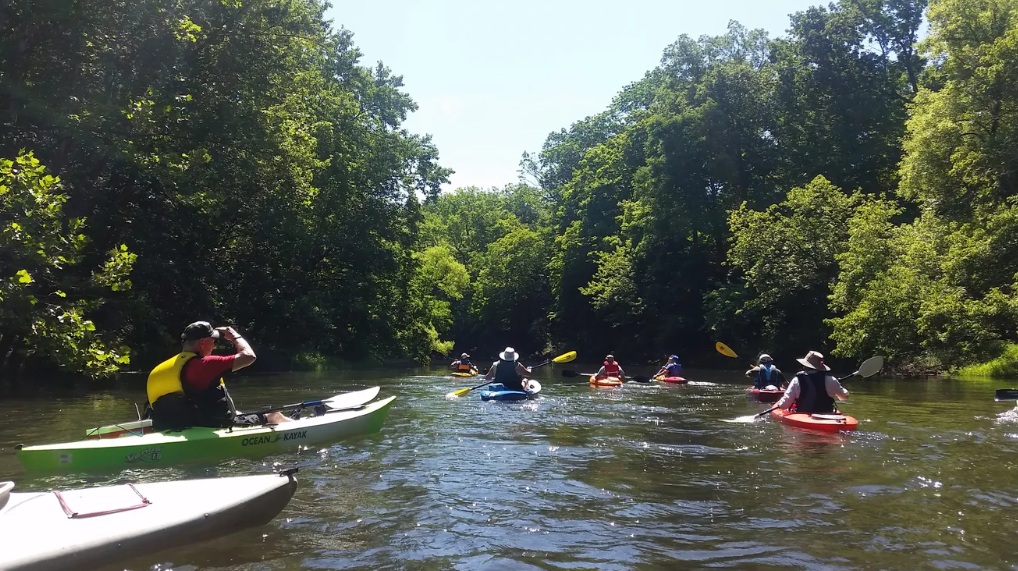
photo courtesy Raritan Headwaters
The Raritan River runs over 70 miles from the edge of the Highlands down to Raritan Bay, brushing by historic towns like Bound Brook, New Brunswick, and Highland Park.
This river attracts a mix of seasoned kayakers and weekend warriors thanks to its easy launches, calm stretches, and pockets of wild scenery in a mostly suburban region.
Key reasons paddlers love the Raritan:
- Diverse Experiences: Upstream, you’ll get wooded banks and shallow riffles. Closer to New Brunswick, the river widens and slows, with easy flatwater and scenic parks at water’s edge.
- Easy Access: Spots like Johnson Park in Piscataway, Donaldson Park in Highland Park, and launch sites near Duke Island Park in Bridgewater make for flexible trip planning.
- Wildlife in the City: Expect to see herons, cormorants, turtles, and occasional muskrats, even with city skylines nearby.
- Community Events: Look for annual group paddles or river cleanups that welcome new paddlers while celebrating local waterway stewardship.
Trip tip: Conditions can change after heavy rains, so check local water levels before planning a longer journey. Rental shops and outfitters nearby make it simple to try paddling without your own gear.
For more launch sites, updates, and tips, explore the Somerset County Park Commission's guide to canoeing and kayaking.
Delaware-Raritan Canal: Smooth, Scenic, and Beginner-Friendly
The Delaware and Raritan Canal stretches for 40 peaceful miles across Middlesex and Somerset counties, creating a “liquid greenway” right through the heart of New Jersey. This historic waterway once moved coal and goods by barge; now, it’s a haven for busy folks who want a taste of quiet nature within minutes of home.
What makes the D&R Canal special:
- All-Flatwater, No Surprises: The canal is still and gentle, making it ideal for new kayakers, families, or anyone craving a calm escape. Wide enough for easy passage but narrow enough to keep you close to overhanging trees and songbirds.
- Great Access Points: Try Griggstown, Blackwells Mills, or Landing Lane in New Brunswick. Many of these spots also have nearby parking, picnic tables, and sometimes rentals.
- Scenic All the Way: Expect a mix of wildflowers, turtles, ducks, and historic canal houses. The tree canopy offers welcome shade, and a gravel towpath runs alongside for shuttle runs or bike-paddle combos.
- Paddle Your Own Adventure: Start at any launch and go upstream or down until you’re ready to turn back. With rarely any current, every trip is out-and-back and stress-free.
You’ll find great tips, seasonal updates, and details about paddling the canal at the official D&R Canal boating page.
Cumberland & Cape May Counties: Union Lake, Maurice River & Cape May Salt Marshes
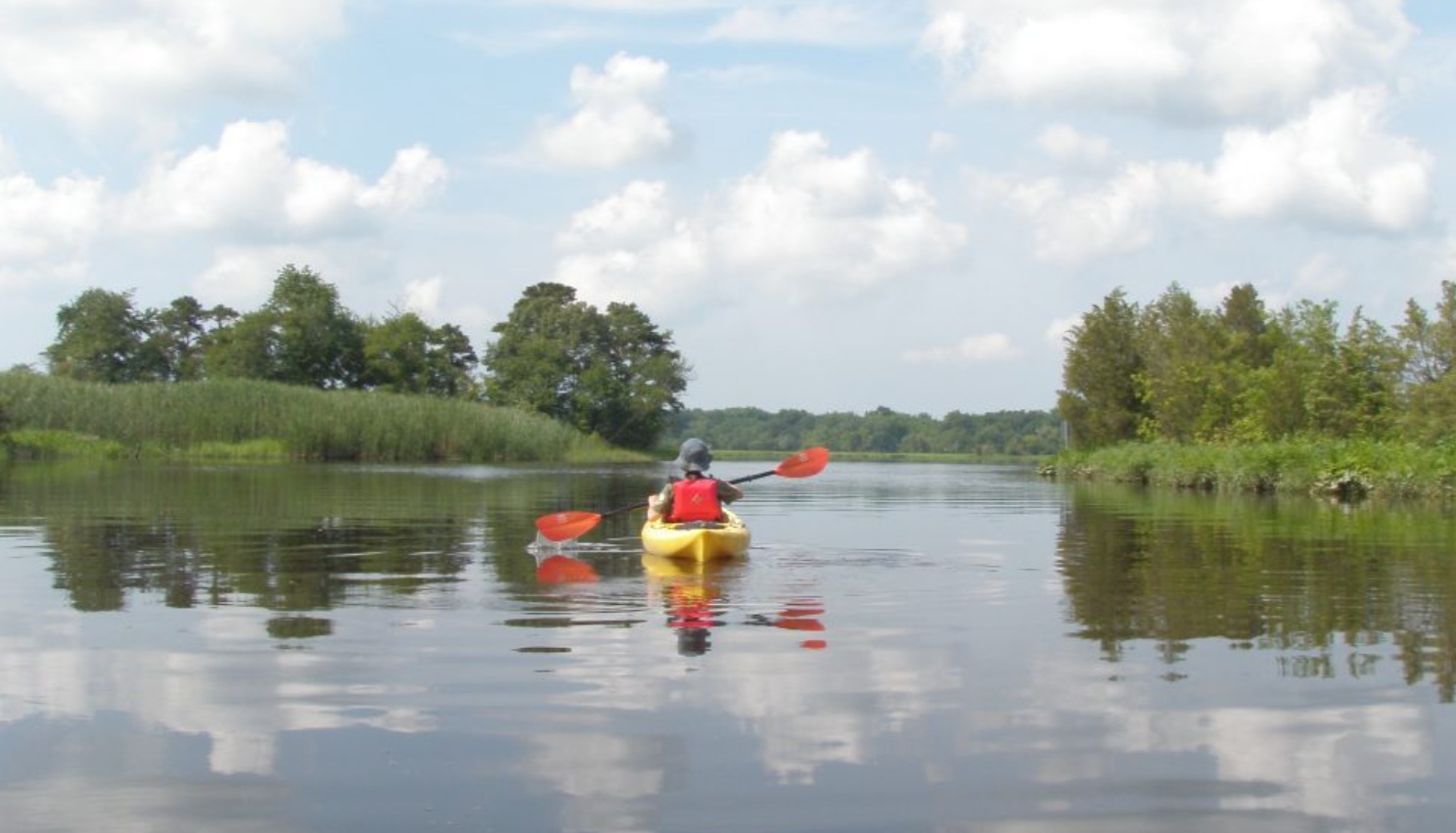
Photo courtesy cumauriceriver.org
Tucked in southern New Jersey, Cumberland and Cape May counties serve up some of the most rewarding kayaking and canoeing adventures in the state. Here, a mix of freshwater lakes, winding tidal rivers, and vast salt marshes create a natural playground for paddlers in search of both scenic views and thriving wildlife.
This region’s waterways offer experiences you won’t find anywhere else in New Jersey—from gliding across the state’s second-largest lake to birdwatching in thousands of acres of tidal marsh.
Union Lake: Millville’s Freshwater Gem
Union Lake sits just outside downtown Millville and is one of the best spots for kayaking canoeing in New Jersey, especially if you like a mix of flatwater and open skies. Covering 950 acres, this is New Jersey’s second-largest lake and a true paddler’s paradise thanks to its easy access and surrounding natural beauty.
What you’ll love about Union Lake:
- Room to Explore: The vast, open water allows for long, stress-free paddles, making it ideal for both new kayakers and those looking to log some serious miles.
- Fishing and Wildlife: You can fish for bass, pickerel, and catfish right from your kayak. Keep an eye out for bald eagles, ospreys, and herons—it’s an all-seasons birding hotspot.
- Easy Launches: Union Lake WMA offers a large, paved boat ramp and plenty of parking. There’s usually enough space even on busy weekends.
- Shoreline Adventures: Quiet coves and tree-lined edges are perfect for a relaxing day or a picnic break.
Union Lake makes a great jumping-off point for anyone wanting to paddle without venturing too far from town, and its size means it rarely feels crowded.
Maurice River: Wild and Scenic Waterway
The Maurice River is a crown jewel for paddlers craving a “wilderness” feel in southern New Jersey. This federally-designated Wild and Scenic River winds through forests, tidal marshes, and historic Millville before reaching the Delaware Bay. The Maurice offers a mix of freshwater and tidal paddling, making every trip a bit different depending on where you put in.
Why paddlers return again and again to the Maurice River:
- Natural Variety: The river flows through forested wetlands, farmlands, and extensive tidal marsh. You can paddle under a dense canopy in the upper reaches, then drift through open salt flats filled with birds closer to the bay.
- Outstanding Wildlife: This corridor supports over half of New Jersey’s threatened and endangered species—including bald eagles, osprey, and rare shorebirds. During migration season, you may see thousands of birds resting or feeding along the banks.
- Protected Habitat: Many stretches are lined with conservation areas like the Peek Preserve and Manumuskin Preserve. These offer pristine conditions and a chance at complete solitude.
- Historic and Cultural Roots: The river’s legacy is still seen in oyster boats and old shipyards around Bivalve and Port Norris, blending local heritage with your adventure.
Learn more about conservation and access points at this detailed Maurice River overview, plus read about its scenic values on this Maurice River federal report.
Cape May Salt Marshes: A Birdwatcher’s Paradise by Paddle
Cape May’s salt marshes stretch along the coast and are some of the best places for nature-focused kayaking and canoeing in New Jersey. Forget boardwalks and beaches for a day—here, the real adventure is winding through tidal creeks teeming with life.
Key features of the Cape May salt marsh experience:
- Tidal Maze: These marshes are laced with narrow channels and creeks, perfect for a slow, exploratory paddle. Expect big sky views and tall grasses swaying with the wind.
- World-Class Birding: Cape May is internationally known for its bird migration. In spring and fall, the marshes explode with activity—herons, ibises, egrets, and more. Bring binoculars!
- Calm, Flat Water: Protected from waves and wind, most tidal creeks offer easy paddling for beginners while still delivering plenty of wild scenery.
- Coastal Conservation: Many marshes lie within the Cape May National Wildlife Refuge and nearby Peaslee Wildlife Management Area, guaranteeing clean water and healthy habitats.
Access varies, but popular public launches include Cape May Harbor and the south end of the salt marsh system. Pair your paddle with morning birdwatching or sunset views for a memorable day.
For birding maps and access tips, visit the Maurice River Corridor birding guide.
Quick Guide: Top Waterways in Cumberland & Cape May Counties
| Waterway | Launch Sites | Best For | Notable Wildlife |
|---|---|---|---|
| Union Lake | Union Lake WMA (Millville) | Flatwater, fishing | Eagles, osprey |
| Maurice River | Millville, Port Norris, Bivalve | Tidal/river paddling | Herons, migratory birds |
| Cape May Marshes | Cape May Harbor, Refuge areas | Birdwatching, calm creeks | Egrets, shorebirds |
These three waterways highlight the diversity and beauty of kayaking canoeing in New Jersey’s southernmost counties. Whether you prefer wide-open lakes, tidal rivers rich in birdlife, or the quiet twist of a coastal creek, Cumberland and Cape May are ready with new waters to discover.
Morris & Warren Counties: Delaware Water Gap National Recreation Area & Lake Hopatcong
Kayaking and canoeing in Morris and Warren counties put you at the doorstep of some of New Jersey’s most breathtaking waterways. The upper stretches of the Delaware River cut deep into rugged ridges, while sprawling lakes like Hopatcong promise classic summer paddling. Both counties offer a balance of wild adventure and simple lake relaxation, with plenty of public access and spots to discover something new every trip.
Delaware Water Gap National Recreation Area: 40 Miles of River Beauty
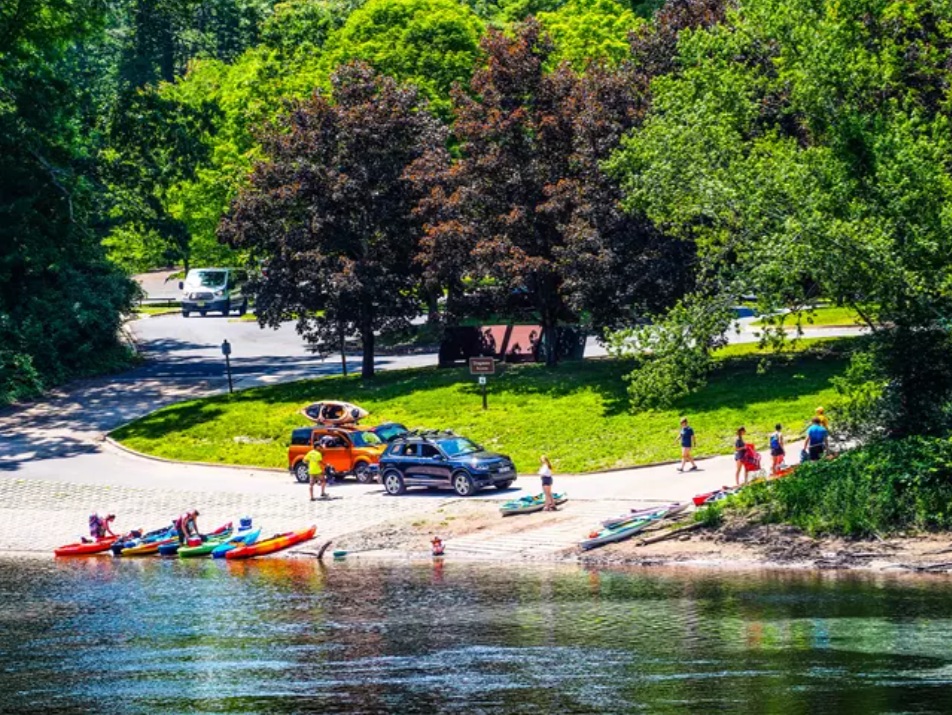
Photo courtesy Delaware Water Gap National Recreation Area
The Delaware Water Gap is the crown jewel for paddlers craving big views and endless variety.
Flowing for 40 miles along the border of New Jersey and Pennsylvania, this National Recreation Area combines mountain scenery with both smooth stretches and lively riffles.
It’s perfect for everyone—from total beginners floating downstream to families on guided trips.
- Dramatic Scenery: Towering cliffs, wooded bluffs, and open valleys set the scene as you paddle. The “Gap” itself, carved by the Delaware River through Kittatinny Ridge, feels almost like the East Coast’s own mini-canyon.
- Diverse Trips: Choose your adventure: go for a short morning paddle or plan a relaxing multi-day trip with riverside camping. There are calm flatwater sections and mild rapids, so you get a sampler of New Jersey’s best.
- Abundant Wildlife: See bald eagles, great blue herons, turtles, and even river otters if you move quietly. The area thrives with migratory birds in spring and fall.
- Easy Access Points: Multiple public boat launches dot both sides of the river. Milford Beach and Smithfield Beach are popular launch sites, and outfitters rent boats or run shuttles for one-way trips.
Paddlers should always check water levels, especially during spring snowmelt or after heavy rain. Find up-to-date info and visitor details at the Delaware Water Gap National Recreation Area official site.
Lake Hopatcong: New Jersey’s Classic Summer Paddle
Lake Hopatcong stands as the largest freshwater body in New Jersey and a summer favorite for locals. Surrounded by rolling hills and parks, it’s a top pick for paddlers who love open water, little coves, and lively lake scenes. Whether you’re in a canoe, a touring kayak, or even a stand-up paddleboard, Hopatcong is easy to enjoy at your own pace.
Why Lake Hopatcong is a top kayaking and canoeing destination:
- Big Water, Little Coves: The main lake is open and breezy, great for logging miles or catching sunrise views. Off the beaten path, tucked-away inlets and small islands beg to be explored.
- Family Friendly: With many parks and sandy beaches along the shore, you’ll find easy launches and safe spots for kids to swim or play during a paddle break.
- Wildlife Close to Home: Watch for ducks, swans, and cormorants along the shore. Anglers love it for bass and pickerel, and you might spot turtles basking on floating logs.
- Marinas and Rentals: Don’t have a boat? Local marinas and shops make it simple to rent kayaks, canoes, or even SUPs for the day. The Hopatcong State Park page lists more on hours and boat launch options.
Lake Hopatcong isn’t just for paddling—pair your adventure with lakeside eats or a picnic in one of the surrounding parks.
Other Noteworthy Paddling Spots
Looking for variety? Both Morris and Warren counties offer even more for fans of kayaking and canoeing in New Jersey:
- Musconetcong River: Winding from Lake Hopatcong through both counties, the Musky delivers mild riffles, lush banks, and a rural feel. Access is easy, making this a great river for day trips.
- Black River: Run through marsh, forest, and even past a waterfall in Morris County’s Hacklebarney State Park. Spring is best for water levels, but late summer’s quiet pools are perfect for wildlife viewing.
- Local Lakes and Reservoirs: Try Split Rock Reservoir for a wild feel or explore Swartswood and White Lake in Warren County for quiet paddling and excellent birdwatching.
For more site ideas and launch maps in Warren County, check out this quick guide on Warren County paddling destinations. For blackwater marsh scenery and trail access in Morris County, njHiking shares updates at Kayaking NJ.
These counties serve every type of paddler—from solo explorers to families looking for an easy day on the water. With so much public access and natural beauty, it’s no wonder Morris and Warren are favorites for kayaking and canoeing in New Jersey.
Conclusion
Kayaking Canoeing in New Jersey covers every style, from quiet family paddles to wild river runs across every county. Whether you’re exploring Burlington’s creeks, the wild rivers of Atlantic and Ocean, North Jersey’s peaceful lakes, central waterways near Somerset, or the wildlife-rich south, you’ll find open water waiting. Each region delivers something special, easy to match with your skill level and schedule.
Don’t worry if you’re new to the sport or just visiting—local outfitters across New Jersey offer rentals, guided trips, and helpful advice. Always check safety guidelines and suggested routes for each spot.
Pick your county and plan your next trip. Kayaking Canoeing in New Jersey is open to everyone who loves the water. If you discover a hidden gem or a favorite stretch, share your story and keep the paddling community strong.
Frequently Asked Questions
About Kayaking and Canoeing in New Jersey
Where are the best places to kayak or canoe in New Jersey?
The best destination depends on the type of trip you want. The Delaware and Raritan Canal and Smithville Lake offer calm flatwater for beginners, the Mullica River provides Pine Barrens scenery, the Delaware Water Gap has mountain views and varied river conditions, and Cape May salt marshes are popular with birdwatchers.
What are the best beginner-friendly kayaking spots in New Jersey?
Smithville Lake, the Delaware and Raritan Canal, Lake Wawayanda, and Cedar Creek are described in the guide as suitable for beginners. These locations generally offer calm or slow-moving water, although paddlers should still check current conditions, launch rules, and weather before leaving.
Do New Jersey kayaking destinations offer boat rentals?
Several locations in the guide have nearby rental or outfitter options, including Rancocas Creek, Lake Wawayanda, the Delaware Water Gap, and Lake Hopatcong. Rental availability, operating hours, and launch access can change by season, so confirm details with the park or outfitter before your trip.
Do you need to check tides or water levels before kayaking in New Jersey?
Check tides when paddling tidal sections of the Egg Harbor River, Maurice River, Rancocas Creek, or Cape May salt marshes. River levels also matter on the Delaware River and Raritan River, especially after heavy rain or during spring runoff.
What should you check before a kayaking or canoeing trip in New Jersey?
Review official information about launch access, parking, permits, rental hours, water levels, tides, weather, and seasonal restrictions. The guide links to several state park, National Park Service, county, and outfitter



Explore surprising New Jersey wildlife myths and the real facts behind local creatures


Recent Articles


-
Guide to New Jersey Fall Activities and Festivals: 2026
Sep 15, 26 05:35 PM
 Plan your 2026 autumn with this guide to New Jersey fall activities and festivals, including seasonal events, local fun, and family-friendly ideas.
 -
Guide to 2026 New Jersey Cultural Festivals and Events
Sep 15, 26 01:28 PM
 Discover the 2026 New Jersey cultural festivals and events, from food and music to art and heritage celebrations, all across the Garden State
 -
Discover New Jersey Top Italian Festivals For The Year 2026
Sep 14, 26 05:29 PM
 Explore the top Italian festivals in NJ for 2026. Enjoy delicious food, live music, and family fun at New Jersey’s favorite cultural events this season.